

Shifting Under Pressure is Different: Free Cello Scale Performance Workout
Why is it so hard to play scales in auditions?
Most of us have been playing scales since we first started learning our instruments. We learned one-octave scales, then two-octave scales, and then we graduated to the big challenge- three-octave scales. But then we find out that not only do we need to practice and learn them, but we need to memorize them and perform them in front of an audience that is grading us on every missed note and dodgy shift. How do we bring scales out of the practice room and on to the stage?
5 Mindset Shifts to try in your practice
- Crescendo to the top of every scale
- Use varying rhythmic patterns to highlight different notes each time
- Avoid “autopilot” repetition, which can lead to playing the same notes out of tune each time and not noticing
- Incorporate challenging slur patterns
- Alternate slow practice with concert tempo
Have Better Audition Preparation from the Start
Practice Like You’re Already in an Audition
- Start from silence
- Announce the scale mentally
- Play it straight through
- Keep going after small mistakes
- Crescendo to the top of every scale
- Finish confidently
Use a book to help you prepare your scales for performance!
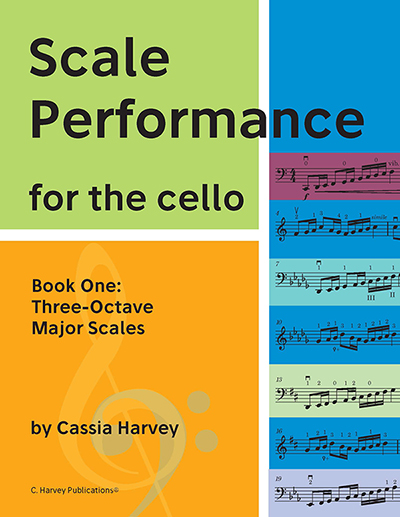
How Practicing to Perform Your Scales is Different from Just Learning Them:
- Try to replicate the situation you are preparing for. Don’t stop to correct it when you make a mistake, but play through to the end.
- Incorporate fast scales and rapid, aggressive shifting movements, rather than doing only slow practice.
- Warm up before playing your scales, rather than using scales as a warm-up.
- Don’t ignore musicality. Scales are far more than just a basic, technical exercise. They create some of the most dramatic moments in music. Playing them expressively can help transition them from the practice room to the concert stage.
Scales on the Concert Stage
Even if you’re not auditioning for anything, we are called on to perform scales under pressure in all major repertoire.
Concertos, Sonatas, and orchestral rep– scales are everywhere! They often happen at a fast tempo. build in dramatic intensity, and end with a climactic high note.
With the right preparation, you can approach those technical-musical hybrid moments without a sense of fear or dread, leaving the excitement to the audience!
A Scale in the Lalo Cello Concerto
This sample page from the Lalo Cello Concerto shows a D major scale fragment near the beginning of the third movement.
The movement starts slowly and players may be lulled into a sense of calm.
At the Allegro vivace, however, the cellist must be ready to play a perfect scale at fortissimo!

How can Scale Performance for the Cello Help You Play More in Tune in Front of People?
This Book:
- Helps you play real-life examples of scales as they are performed in standard repertoire. Learn how to approach these sections without fear!
- Gives you exercises to practice rapid shifts, hand movements, and string crossings.
- Presents rhythm and bowing variations specifically targeted to improving your speed, accuracy, and musically shaping the scale.
- Gives you material that strengthens your left hand and helps you balance in each position, which in turn will help you play more in tune in stressful situations!
What’s in Scale Performance for the Cello? See Some Sample Pages!
Sample Exercise Page from Scale Performance, Book One
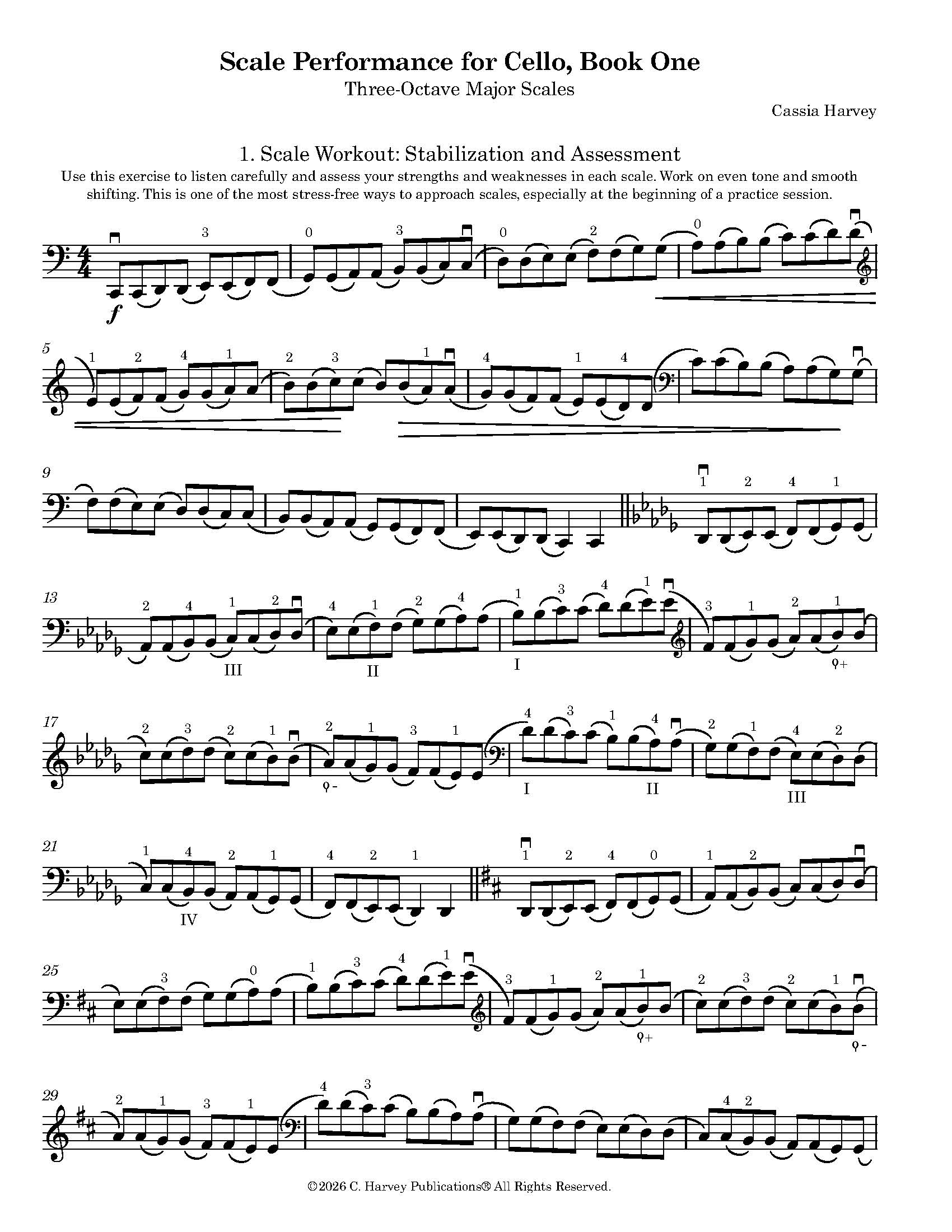
Sample Exercise Page from Scale Performance, Book One
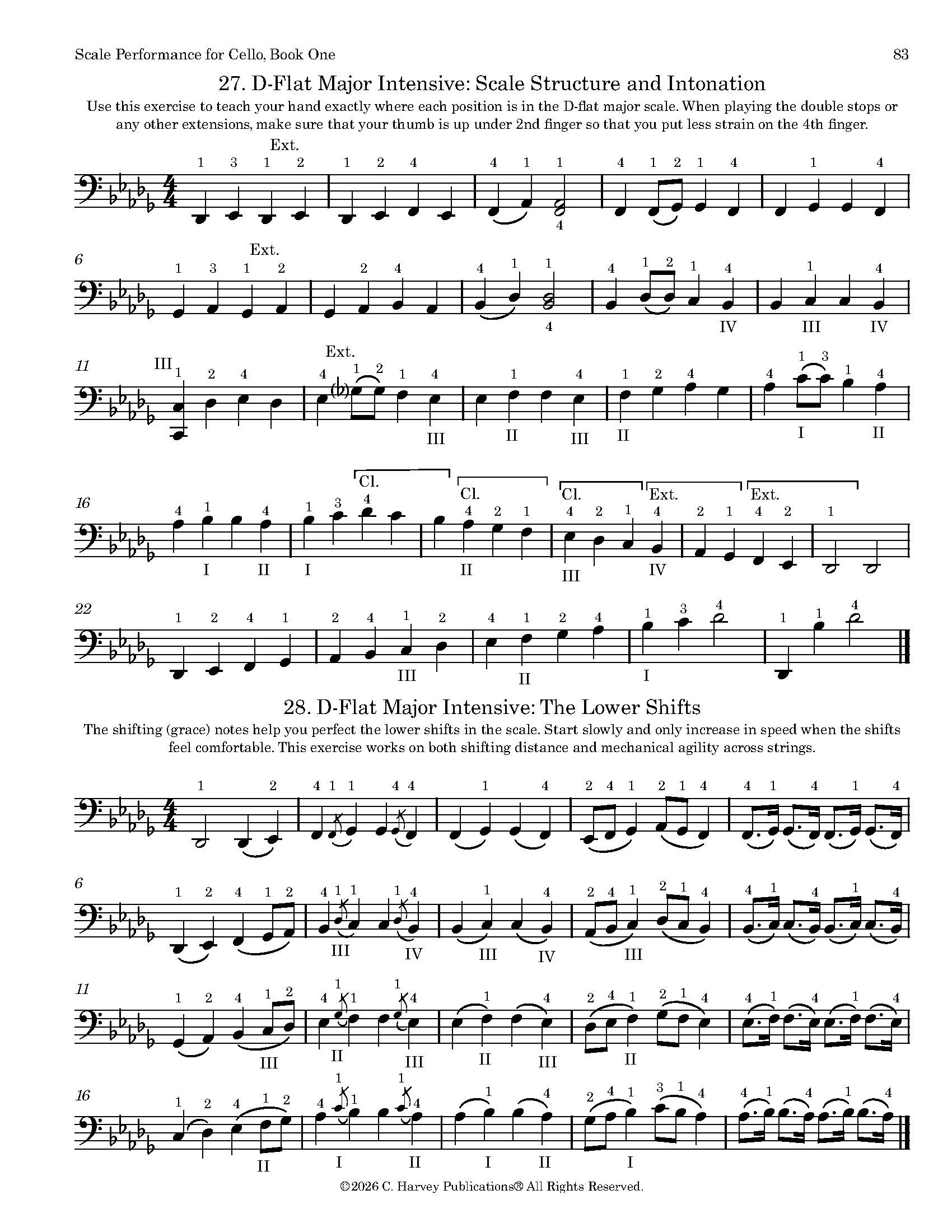
The Scale Performance Takeaway
So, the next time you have scales on your practice list, give this approach a try:
- Choose one scale and practice it with the same attention you would give to a piece you’re preparing for a performance.
- Give this free exercise a try and notice how it helps the scales flow more smoothly.
- Think performance, not just practice. Focus on consistency, confidence, tone, and musicality, not just technical accuracy.
- Put yourself in the audition room: Practice starting confidently and playing all the way through without stopping to correct anything.
- Take your scale practice to the next level with the new Scale Performance book. Explore new exercises and guidance for preparing scales to perform with greater confidence.
Change the way you think about scales!
Rather than just something you “get through” before moving on to your repertoire, scale performance practice can help you be a better cellist in front of people!
Get Started on Your Cello Scale Performance Journey for Free!
Here is Some Free Cello Sheet Music to Help!
To get you started, here is a short free exercise for scale performance that you can download today. Get ahead of audition season with this page to help with your scale journey. Click here to get your copy!


Are You Still Struggling with Scale Basics? Don’t Worry! These Books Help Teach the Scales!
These books break the scales down into more manageable shifts and spaces and actually teach your hand how to play them!
If the Cello Scale Performance book is a little daunting, start your three-octave scale journey with one of these!


Frequently Asked Questions
Why can I play scales perfectly in my practice room and then stumble in an audition?
Often in our practice we treat scales as a warm-up. We rarely practice them with the same attention as we do our repertoire. Even if we drill them over and over, we focus only on technical accuracy, rather than the complete package of what makes a great performance. Practicing for tone, speed, fast shifting, and musicality can change that.
What is the purpose of Scale Performance for the Cello, Book One?
This book is intended for cellists and cello students who have already mastered the basic skill of learning and playing three octave scales. It does not teach the scales from the beginning, but instead helps players bring their scales into the audition room and concert hall.