


Octave Shifts for the Cello, Book Three
$11.95
In stock
Master Advanced Octave Shifts High on the Cello Fingerboard
Confident shifting is one of the defining skills of advanced cello playing. As repertoire moves higher up the fingerboard, large shifts become more frequent and less forgiving, requiring exceptional accuracy, coordination, and fingerboard awareness.
Octave Shifts for the Cello, Book Three continues the progression from the first two books by focusing on octave shifting exercises in the upper regions of the fingerboard. These carefully sequenced studies provide advanced cellists with a systematic way to strengthen one of the most challenging aspects of cello technique outside of repertoire.
Rather than waiting for difficult concerto passages to expose weaknesses in shifting, you’ll practice the movements directly through focused technical exercises that develop secure muscle memory, reliable intonation, and confident fingerboard navigation. As the exercises progress, you’ll become increasingly comfortable making large shifts in higher positions while maintaining a relaxed left hand and consistent tone.
This book is an excellent addition to a daily technical routine for advanced intermediate through professional cellists preparing solo literature, advanced études, auditions, and orchestral repertoire. By isolating octave shifts and presenting them in a progressive format, you’ll build skills that transfer naturally into demanding works such as the Saint-Saëns Cello Concerto No. 1, the Lalo Cello Concerto, Tchaikovsky’s Rococo Variations, and many other advanced compositions.
Together, Octave Shifts for the Cello, Books One, Two, and Three provide a comprehensive course in mastering large distance shifts across the cello fingerboard.
by Cassia Harvey
45 pages CHP215
978-0-615711-77-5
©2011 C. Harvey Publications
Additional information
| Clefs Used | Bass, tenor, and treble clef |
|---|---|
| Heterogeneous Class Use | No, cannot be used in heterogeneous classes |
| Level | Advanced |
| Positions Used | Covers most of the fingerboard |
Common Questions About This Book
Who is this book for?
What will cellists learn from this book?
How is Book Three different from the first two books?
Why study octave shifts separately from repertoire?
You Might Also Be Interested In
-

Artificial Harmonics for the Cello, Book One
$10.95Add to cart -

The Saint-Saens Cello Concerto No. 1 Study Book, Volume Two
$19.95Add to cart -
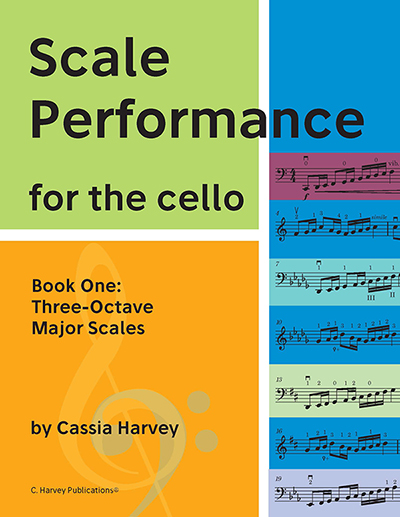
Scale Performance for the Cello, Book One: Three-Octave Major Scales
$15.95Add to cart -

Thirds in Thumb Position for the Cello, Book One
$11.95Add to cart -

Octave Scales for the Cello, Book One
$10.95Add to cart -

Octaves for the Cello, Book Two
$10.95Add to cart -

Scale Studies for the Cello (One String), Book Two
$11.95Add to cart -

Octaves for the Cello, Book Three
$10.95Add to cart -

Scale Studies for the Cello (One String), Book Three
$11.95Add to cart -

Tenths for the Cello, Book One
$10.95Add to cart

Reviews